HDB CONCESSIONARY
The HDB loan offers interest rate stability pegged at +0.1% above the prevailing CPF Ordinary Account rate. This ensures long-term predictability for household budgeting.
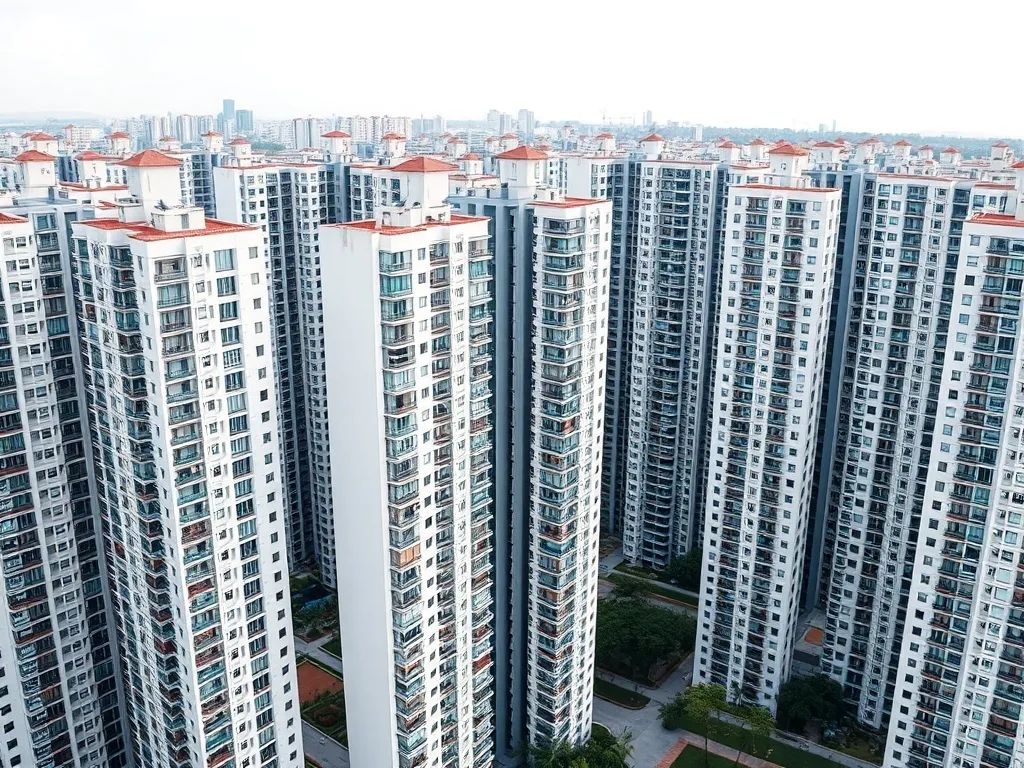
Detailed breakdown of mortgage frameworks for Singapore public housing. Analyze interest rates, leverage limits, and repayment structures.
VIEW DATA POINTSThe HDB loan offers interest rate stability pegged at +0.1% above the prevailing CPF Ordinary Account rate. This ensures long-term predictability for household budgeting.
Commercial bank loans provide competitive floating or fixed rates often lower than the HDB rate during low-interest environments, allowing for faster equity growth.
Understanding the Transaction Fee Schedule is vital for determining the initial cash outlay required for bank versus HDB financing.
The HDB concessionary interest rate is currently maintained at 2.6% per annum. This figure is derived from the CPF Ordinary Account (OA) interest rate, which is currently 2.5%, plus a margin of 0.1%. This rate has remained unchanged for over two decades, providing a hedge against market volatility that affects commercial bank rates.
Borrowers must meet specific eligibility criteria, including income ceilings and citizenship status, to qualify for this rate. Unlike bank loans, there are no early repayment penalties for HDB loans, offering homeowners the flexibility to reduce their principal debt whenever surplus funds are available.
Commercial banks in Singapore are governed by MAS (Monetary Authority of Singapore) regulations. Currently, the Loan-to-Value (LTV) limit for bank loans is capped at 75% for the first property. This requires a 25% downpayment, of which 5% must be paid strictly in cash, while the remaining 20% can be funded through CPF OA or cash.
When comparing this to HDB loans, which may allow for a higher LTV under specific conditions, the bank option often necessitates higher initial liquidity. However, the interest savings over a 20-year tenure can be significant if the reference rates (such as SORA) remain below the 2.6% HDB benchmark. Refer to our CPF Housing Grants Specification to see how subsidies offset these costs.
Recent cooling measures have adjusted the LTV limit for HDB-granted loans to 75% for applications received on or after 20 August 2024. This alignment between HDB and Bank LTV limits aims to promote financial prudence among homebuyers. Previously, HDB loans offered up to 80% or 85% LTV, providing significantly more leverage for young couples.
The reduction in LTV means that buyers must now secure a larger downpayment. For a $500,000 flat, a 75% LTV requires $125,000 in combined CPF and cash. This underscores the importance of a rigorous HDB Financial Analysis before entering a purchase agreement.
The TDSR framework limits the portion of a borrower's gross monthly income that can be used to service all debt obligations to 55%. This includes car loans, credit cards, and personal loans, in addition to the property mortgage. For HDB flats, the Mortgage Servicing Ratio (MSR) also applies, capping the mortgage repayment at 30% of the household income.
Failure to meet these ratios will result in a lower loan amount than requested. It is imperative to clear existing high-interest debts before applying for a mortgage to maximize the borrowing capacity within the legal limits defined by the MAS.